Care Guides ·
Supporting People Living with Dementia at Home: Continuity, Routine and Language
HomeCare Direct Wales · 4 min read

Good home support for someone living with dementia rests on three things: a consistent team of known faces, a familiar daily routine, and care in the person's own first language. Get those right and daily life becomes calmer and more settled, for the person and for the family around them. September is World Alzheimer's Month, with World Alzheimer's Day on 21 September, so it is a good moment to talk plainly about something many families are living with quietly.
There is a lot of advice out there, and much of it can feel overwhelming. We want to keep this simple. Organisations such as Alzheimer's Society offer detailed guidance on the condition itself. What we can add, from more than 20 years of arranging care in people's own homes, is what actually helps day to day.
Continuity: the same known faces
For someone living with dementia, new faces can be unsettling. A stranger at the door, a different carer each visit, a name they cannot place: these small things add up, and they can cause real distress. Familiarity does the opposite. It reassures.
The way care is arranged really matters here. Under The HCD Model, you and your family recruit your own consistent team, often people from your own community. We employ them on permanent contracts and train them to CIW (Care Inspectorate Wales) standards, and our nurses assess their competency and oversee any clinical care. The people who come through your door stay the same.
That continuity means your team come to know the whole person and their history, not only the tasks in a care plan. They learn the habits and the small preferences that make a day go well. They notice when something is not quite right, because they know what settled looks like for this particular person. Over time, that shared knowledge becomes one of the most valuable parts of the whole arrangement. You can read more about how a community-rooted team comes together in our piece on local people supporting local people.
Routine: a familiar rhythm
Dementia can make the world feel unpredictable. A steady routine pushes back against that. When mornings unfold in the same order, when meals come at the expected time, when the same gentle rhythm repeats day after day, there is less to work out and less to worry about.
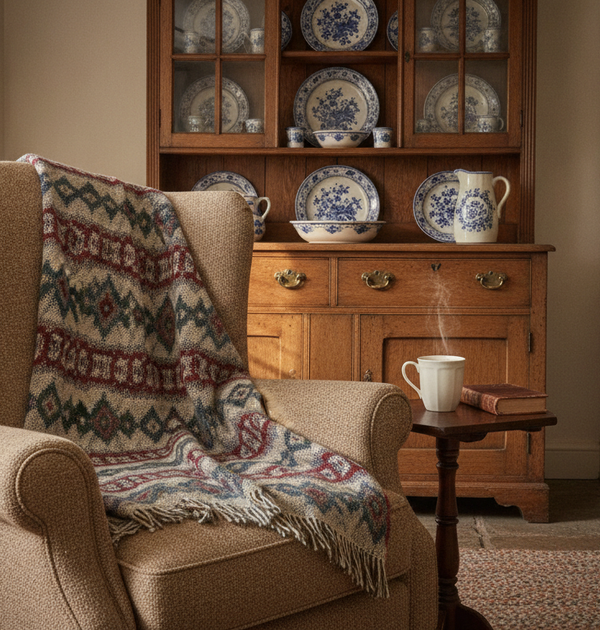
Home itself is part of this. Familiar surroundings carry meaning and memory: the chair by the window, the mug that is always used, the view of the garden. Supporting someone in their own home, rather than moving them somewhere new, keeps those anchors in place. A consistent team learns the routine that works and protects it, adjusting gently as needs change rather than starting from scratch.
None of this treats or cures dementia, and we would never claim otherwise. A familiar rhythm, held steady by people who know it, genuinely helps a person feel safe in their own day.
Language: the words that stay
Language matters deeply, and for many families in Wales it matters most of all. People living with dementia often return to the language of their childhood. English learned later in life can fade, while Welsh, the first language and the language of home, remains.
When that happens, being spoken to in Welsh makes the difference between being understood and being left adrift. A carer who shares your first language can offer comfort, reassurance and connection in the words that still land. This is the thinking behind the Welsh Government's More than just words framework, which asks care providers to offer Welsh-language care without people having to request it.
Because you choose your own team, first-language care is built in from the start. If Welsh matters in your home, you recruit Welsh speakers, often people from your own community who understand not just the words but the culture and the place behind them. We look at this in detail in our article on Welsh-language home care and the Active Offer.
Why this suits dementia support so well
Put these three pillars together and you can see why a chosen, consistent, community-rooted team is such a good fit for dementia support. The same trusted people, keeping a familiar routine, speaking the language that feels like home: that is the kind of steady, personal support that helps someone live well at home for longer.
It helps the whole family too. When you know who is coming, when you trust them, and when they truly know the person you love, a great deal of worry lifts. Where support needs are more complex, that same continuity carries through. You can read how we approach that in supporting complex needs at home.
Every situation is different, and there is no single right answer. What we can offer is a conversation: an honest look at what daily life is like now, and how a consistent, well-supported team might help.
If someone you love is living with dementia and you are thinking about support at home, we would be glad to talk it through. Get in touch for a free, no-obligation conversation through our contact form or by calling 0345 061 9000.
Stay Updated
Subscribe to receive our latest news and updates.